Order Online Today!
Secure Online Payments!
Fast & Affordable Nationwide Delivery!


Newsroom Article
Organized Crime: Remote Jamming
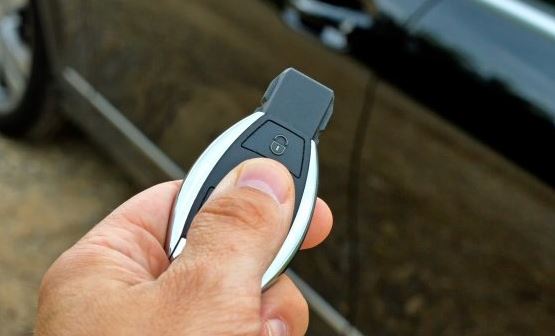
• Vehicle remote or signal jamming is a prevalent criminal trend across South Africa.
• The act involves individuals interfering with remote signals – a normal garage remote is the most commonly used.
• We spoke to vehicle security specialist Moinuddin Gaibe from Auto-Wizz to find out more about the alarming trend.
“It will never happen to me” is a phrase many often believe. Still, no matter how cautious and precise one tries to be, an unfortunate scenario is often not in your control.
Whether coming out of a shopping centre or even outside a residence, there is a risk that certain parts of a car or your vehicle can be stolen in plain sight.
The rise of hijackings and vehicle theft also doesn’t inspire confidence because you could be the unfortunate victim at the mercy of a criminal wielding a gun or knife, immediately putting your life at risk.
An invisible threat
On a similar note, vehicle remote or signal jamming has become a prevalent criminal trend across South Africa. Ironically, thieves don’t need to threaten or harm you to take what they want.
Remote jamming is nothing new and the streams of CCTV video footage doing the rounds shows just how intricate, planned, and swift the entire process is. The act involves individuals interfering or fooling the vehicle’s alarm system with remote signals – a standard garage remote is most commonly used – to gain access and steal your personal belongings with relative ease.
Thieves target the more modern vehicles because most of them lock and unlock the doors via a remote key.
Just to find out how these individuals operate and how to potentially protect yourself in the process, we sat down with Moinuddin Gaibe from Auto Wizz in Cape Town to find out more about this alarming trend.
Wheels24: How exactly does remote or signal jamming work?
Moinuddin Gaibe: “A radio frequency gets sent, the control module inside the car sees whatever signal you are sending it and then it opens the car. Previously, we had what you call a fixed RF signal, so the same RF signal – let’s say hypothetically, your signal was 464hZ on medium wave because the wave also plays a role. When it sees that signal, it unlocks the car, the immobiliser will disengage for about two to three minutes, and you drive off.
“Today, we get something called Code Rolling, so every time you press your remote, the remote sends a signal to the alarm, and it also sends a signal telling it what the following code will be. The alarm then cues that RF signal, so the next time you press it, it identifies the signal.
“So, when you are pressing another remote, you are sending another RF signal. For example, say you are using a 200hZ device and keeping it pushed down at 200hZ; it is there permanently. Someone else then comes with a 400hZ device, and 200 plus 400 makes 600. The alarm is not looking for 600hZ; it’s looking for 400hZ – that is essentially how remote jamming works.”
W24: Do criminals still use a generic remote control to block the signal?
MG: “They [thieves] are at the point now where garage remotes aren’t used anymore; instead, signal and RF transmitters are used. A transmitter is kept inside the vehicle they’re operating from, hooked up to the cigarette lighter and sends an RF signal out all the time. They then sit, and they’ve got guys sitting around, communicating via phone about which car they’re targeting. They watch to see if the indicators flash. You press the remote and walk away out of habit without checking to see if the door is physically closed or locked. They prey on the fact that you didn’t check.”
W24: Are there any specific vehicles they target?
MG: “They target any car, and sometimes the jamming works on some vehicles, basically like the luck of the draw, whichever car it works on. After they’ve broken into your vehicle, they lock it, so when you come back and unlock it, then you are none the wiser.”You get in and drive home, then start looking for your belongings. In the meantime, you begin to second guess yourself, meanwhile it was stolen at the original location, and you would never have known.”
W24: Are there particular spots or areas that they possibly operate in and around?
MG: “Their places of opportunity are places like creches and primary schools because the parents walk the kids into the premises.”They do their homework and scope a place and person out for departure and arrival times, timing how long the person takes from the moment they leave their car. A lot of the time, they take the stuff out of the bag and leave it behind.”
W24: Is there a way in which people can protect themselves against a car jamming threat?
MG: “We have a product called a sniffing siren and what it does is when you switch your car off, your voltage is sitting at 14.4 volts. It then sees a charging voltage, and in that time, it doesn’t ‘sniff’. As soon as you switch the car off and it signals that the voltage has dropped from 14 to maybe 13.8 for around 30 seconds, it sniffs. So, when you arm your alarm, and it sees another frequency being in the air for longer than five to 10 seconds when you press your alarm, the siren starts chirping, making you aware if the car has been locked or not. We fit this particular siren for R850.”It might take a few seconds but it could spare you a lot of inconvenience – just by making sure your vehicle is locked after you’ve hit the button. Yes, new cars with keyless entry unlock automatically when the key is detected as you approach or if you’re close enough, but just stop and physically check the back doors, or hit the alarm again and make sure your indicator lights flash to signal your car is definitely locked.
Article Credit: www.news24.co.za